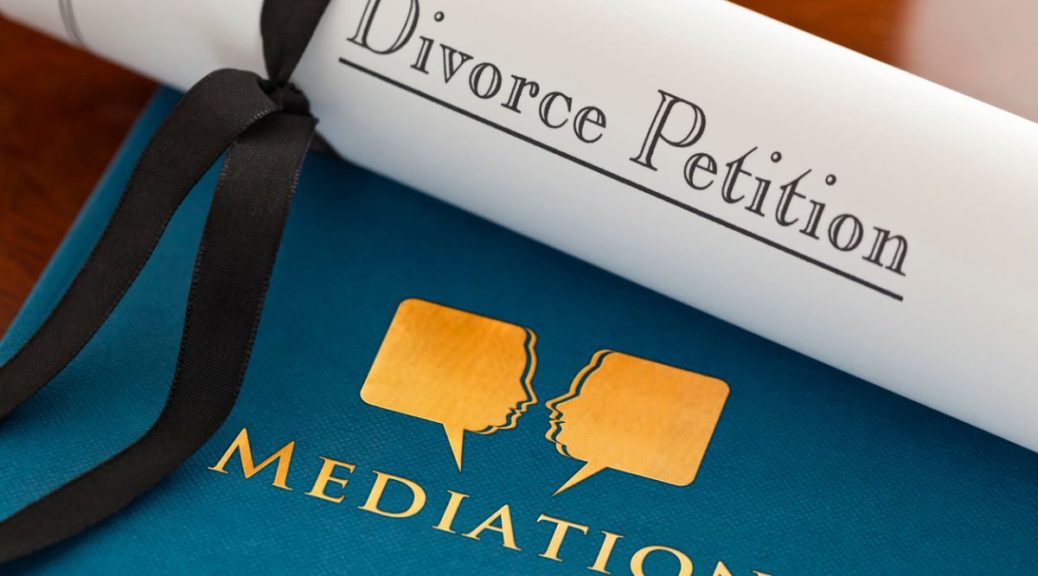
I’ve Been Served with Divorce Papers. What Now

I’ve Been Served with Divorce Papers. What Now?

Maybe you were expecting it. Maybe it was a complete surprise. Either way, being served with divorce papers is a wakeup call for most people. This is not the time to sit and lament the end of your marriage, however. Once you have the divorce papers in your hands, the clock starts ticking.

You’ll Need to Read Carefully

The divorce papers you just received are important to your future. Take some time to review them, paying attention to the details. You may be able to figure out what your spouse wants to get from the divorce.

Reflect on Your Situation

Start thinking about your marriage and especially how you would like to proceed. Would you like to try to save your marriage, or is it time to move on? If you have children, how will you help them handle the new state of affairs? However, don’t take too much time. You need to respond within 30 days from the date you were served with divorce papers.

Then File a Response … or Not

Most people do something in response to being served with divorce papers. You have four basic options:
  • Don’t file any response. However, your spouse or domestic partner may get everything he or she wants. This is called a “true default.”
  • Prepare a written, notarized agreement signed by you and your spouse. When divorcing partners agree on everything, you may be able to submit this agreement in lieu of filing a formal response. Courts may call this a “default with agreement” case.
  • File a response and prepare a written agreement. This type of case is considered uncontested since you and your partner agree on all issues.
  • File a response that disagrees with some or all of your spouse’s assertions and requests. This is truly a “contested” case. The court may decide any issues that remain unresolved, including property division, child custody, and spousal support.
Divorce cases can be very complicated. You may need some help navigating the system and protecting your rights.

Served with Divorce Papers? Take Action

You don’t have to go through this alone. The attorneys at the Law Offices of Judy L. Burger are experienced at all phases of legal separations and divorce proceedings. Call us at 415-293-8314 to schedule a private appointment or visit our website. We maintain offices in San Francisco, Beverly Hills, Marin County, Santa Barbara, Ventura/Oxnard, San Jose, Gold River (Sacramento), and surrounding communities.
Who Gets the Intellectual Property During a Divorce

Who Gets the Intellectual Property During a Divorce?

Some property is easy to split during a divorce. One spouse may get the kitchen equipment, while the other gets the books. Maybe each spouse gets a car, and so on. With some intangible property, however, the division can be less clear cut. For example, intellectual property can be a bit of a mystery, which makes it difficult to divide during a divorce. Who gets the intellectual property? That depends on several factors.

Property Division, Generally

It’s been said a million times, but that’s because it is true: California is a community property state. This means that couples generally have equal ownership of property and debt acquired during their marriage. There are some exceptions. For example, gifts and inheritance usually remain the separate property of the spouse recipient.

Types of “Intellectual Property”

By definition, intellectual property typically is a work of human intellect. In practice, intellectual property rights may attach to:
  • Patents,
  • Copyrights,
  • Industrial design rights,
  • Plant varieties,
  • Trademarks, and
  • Trade secrets.
An inventor may have exclusive rights to an invention that is patented. Someone involved in an artistic or creative field may own the copyright to their works, which also gives them exclusive rights. If the inventor or artist owns the sole right to use or benefit from their intellectual property, is it their separate property? Should it be considered community property?

Dividing Intellectual Property During a Divorce

Generally, a spouse’s effort, time, and skill are considered community assets. During a divorce, each party must disclose all assets and debts to the other party, including patents, trademarks, copyrights, and other intellectual property. As with other property, intellectual property may be divided among the spouses, regardless of who actually created it. When it comes time to divide intellectual property, however, that property’s value can be a problem. A work of art or invention may not be profitable at the time of divorce but could generate future income. Determining whether an ex-spouse receives any future profits from intellectual property is a complicated issue. In re Marriage of Worth is one important California divorce case that involved intellectual property rights. The husband, Frederick L. Worth, had written and published several trivia books during his marriage to Susan Worth. When the couple divorced, they agreed to split the book royalties evenly. However, the husband later filed a lawsuit against the makers of the board game “Trivial Pursuit” claiming they had plagiarized his books. Though their divorce was final, Susan Worth claimed one-half of any proceeds from her husband’s lawsuit. Because the books were considered community property in the divorce, “such copyrights and related tangible benefits must be considered community property.” (See 1 Nimmer on Copyright (1987) §6.13[B], p. 6-37).

Intellectual Property – Divorce or Not – Is Complicated

If you or your spouse own interest in intellectual property, talk to an experienced California divorce attorney today. Please call us at (415) 293-8314 to schedule a confidential appointment with one of our attorneys. Ms. Burger is a California Certified Family Law Specialist and founder of the Law Offices of Judy L. Burger. We assist clients in California’s Northern to Central Coast, including San Francisco, Beverly Hills, Gold River, Santa Barbara, Ventura/Oxnard, and surrounding communities.

Tips for Helping Kids Survive Divorce

Tips for Helping Kids Survive Divorce

If you are getting divorced and have children, you may question how to tell your kids about the divorce. They may need help learning to cope with all the changes in their lives. Parents, and other adults who love the children, may need tips on helping kids survive divorce. We will look at few tips in this article.

Recognize Stages Kids Go Through

After telling your children about the divorce, watch for the following emotions and behavior:

  • Denial – refusing to believe their parents are separating.
  • Anger – misbehaving and acting out because of the disruption to their lives.
  • Depression – feeling overwhelmed or helpless.
  • Bargaining – trying to get parents to reconcile.
  • Acceptance – beginning to heal and get back to normal.

At every stage, parents may have the opportunity to help their children cope.

Parents Can Make Transitions Easier – Or Far More Difficult

The parents’ behavior goes a long way toward helping kids learn to survive and thrive during a divorce. With that in mind:

  • Don’t use your children as pawns or messengers.
  • Do talk positively as much as possible.
  • Don’t talk bad about your children’s other parent.
  • Do encourage your children to talk about how they feel.
  • Don’t fight with each other in front of the kids.
  • Do communicate cordially and coordinate visitation.
  • Don’t forget to pick up and return the kids at the scheduled dates and times.
  • Do show your children that you love them.

In addition, negotiate your marital settlement and parenting plan in good faith. Try to come up with a plan that helps your kids survive divorce.

Courts Pay Attention to Children’s Needs

Laws, statutes, and regulations cannot eliminate feelings of rage, revenge, unworthiness, and grief. It may be difficult to control your emotions and actions. However, judges will assess how parents relate to their children when deciding child custody arrangements. Courts are required to keep the children’s best interests in mind, even when the parents struggle with addressing their kids’ feelings along with their own.

Helping Kids Survive Divorce Is a Top Priority

It’s not always easy, though. Having an attorney help with a divorce may ease some of your tension.

Judy Burger is a California Certified Family Law Specialist, and founder of the Law Offices of Judy L. Burger. Please call our offices at 415-293-8314 to set up an appointment with one of our attorneys. We assist clients along the Northern to Central California Coast.
No Fault Divorce Do I Need Grounds for Divorce in California

No Fault Divorce: Do I Need Grounds for Divorce in California

Sarah felt it was time to end her marriage to Albert. They’d been together seven years. After the honeymoon, their relationship shifted, work tugged them apart, and they rarely spent time together any more. However, Sarah wondered if she needed grounds for divorce in California? She couldn’t just ‘dissolve’ their marriage without some big problem like infidelity or domestic violence, right? Let’s address this question and others you may have about no-fault divorce.

Should I have a reason for filing for divorce?

The fact that you want to dissolve your marriage is a reason. It’s not necessary to make allegations of adultery, abuse, or abandonment. Instead, you simply file the papers to dissolve your marital bonds citing something like irreconcilable differences or irreparable breakdown of the marriage.

California was actually the first state to pass a no-fault divorce law in 1969. All other states now allow no-fault divorce.

What does “irreconcilable differences” mean?

Well, it’s not just a 1984 movie starring Ryan O’Neal and Drew Barrymore. You’ve probably heard the term mentioned in the news, though.

A strict legal definition of irreconcilable differences means that the two parties face obstacles to continuing their marriage. Basically, their situation has become too bad to fix.

Before no-fault divorce, the party filing for dissolution had to prove to the court that the marriage should be terminated.

Is a no-fault divorce easier to get?

Divorces take at least six months to finalize. However, the length of time it takes to resolve all issues varies greatly depending on those issues. For example, a marriage with children or extensive financial holdings may take longer than a less complex situation.

Generally, though, a no-fault divorce is less complicated than a ‘fault’ divorce. It’s not necessary to gather evidence to present to the judge who would then decide whether or not your marriage could end.

You Don’t Have to Do This Alone

It’s not necessary to prove wrongdoing to get a divorce in California. However, a spouse’s bad behavior or misconduct may affect property division, child support, child custody, and spousal support. Talk to an experienced California divorce attorney to learn more about your options.

Ms. Burger is a California Certified Family Law Specialist and founder of the Law Offices of Judy L. Burger. We assist clients in California’s Northern to Central Coast, including San Francisco, Beverly Hills, Gold River, Santa Barbara, Ventura/Oxnard, and surrounding communities.


Please call us at (415) 293-8314 to schedule a confidential appointment with one of our attorneys.
What to Do When Your Royalties Last Longer Than Your Marriage

What to Do When Your Royalties Last Longer Than Your Marriage

Joyce, a successful singer/songwriter, recently married her high school sweetheart. Aspiring novelist Kristen and her agent have been married for eight years. And Jack has spent countless hours in his garage workshop honing his creations hoping for a big payoff someday with the help of his wife of eleven years. Each of these people may find themselves facing a tricky issue if they decide to divorce – what to do with the royalties earned from their creative works or inventions.

Dividing Property in a Divorce 

California is one of nine states that use community property as the basis for property division. This means that property and debts obtained during a marriage are presumed to be owned 50/50. Splitting a bank account between two people is fairly easy. However, dividing less tangible assets – like royalties – typically is more difficult.

Royalties, as Property

A royalty is a sum of money paid to another person in exchange for using their property. Royalties may be paid to use someone’s:

  • Music,
  • Art and photographs,
  • Books, short stories, and other types of writing,
  • Minerals (sometimes these are called mineral rights instead of royalties), and
  • Items that are patented or copyrighted.

An item that generates royalties is an asset, as is the income generated. In fact, royalties typically are reported as business income.

Dividing Royalties

Property division can be a major part of a divorce case. A couple’s assets generally are separate property, community property, or commingled. How royalties are split may depend on when a royalty-producing work was:

  • Created – Was it before or after the wedding?
  • Patented – Was the invention developed during the marriage with contributions from the spouse.
  • Managed – Did the spouse contribute to the work’s success during the marriage.

Generally, work product or inventions created or developed during a marriage are community property. If the work was done prior to the marriage, but the spouse contributed to its success in some way, royalties could be split. Finally, an invention created during a marriage but not patented until after the marriage may still generate income for the ex-spouse.

A divorcing couple can certainly address royalty issues when negotiating their marital settlement:

  • Estimate the current and future value of an asset, then assign percentages to each party.
  • Swap ownership and royalty rights for property of equal value. For example, one spouse might keep 100% of a music portfolio and give the other spouse 100% of the Malibu beach house.
  • Agree on a split of ownership and royalty rights. This can even be done in a way that slowly phases out one spouse.

Complicated divorces involving royalty-producing assets typically involve more than state divorce laws.

Royalties May be a Double-Edged Sword.

They are an undeniably important asset and a potential source of income. The spouse who produces the intellectual property or work of art may want to keep all the royalties. However, that person’s spouse may be entitled to a percentage.

Judy Burger is a California Certified Family Law Specialist, and founder of the Law Offices of Judy L. Burger. She uses her extensive experience with business-related valuations to help clients with business and royalty properties. Please call our offices at 415-293-8314 to set up an appointment with one of our attorneys. We assist clients along the Northern to Central California Coast.

Divorce by Default

Divorce by Default

Divorce, like marriage, requires two people. Or does it? Sometimes it may be difficult or impossible for both spouses to participate in the divorce proceeding. Sometimes one spouse may simply refuse to participate. Fortunately, California law allows for divorce by default.

When Both Parties Participate

In a typical divorce, one spouse takes the lead even if both parties want to end their marriage. For example, you may start the divorce case by filing the petition for divorce, then serving the petition and a summons on your spouse. He or she then files a response to the petition. Depending on the situation, you and your spouse may go through a discovery phase before negotiating a marital settlement. If the parties are unable to reach an agreement, their divorce is heard by a judge who makes decisions for them. The divorce will happen either through negotiation of a marital settlement agreement or by court order.

When Divorce by Default Is the Solution

The responding spouse must respond to the divorce petition in 30 days. If no response is filed, the divorce may be concluded in one of the following ways:

  • A default or uncontested case. You and your spouse have reached a settlement agreement about ending the marriage. Final paperwork is filed and, if approved, you are legally divorced.
  • A true default. You and your spouse have not reached an agreement. However, your marriage still ends, as soon as your paperwork is filed and approved. In a true default, the non-responding party generally has forfeited any right to dispute spousal support, child support, child custody, and property division.

Final Thoughts

Opting for a default divorce may open a Pandora’s box of problems. If you are thinking of ignoring a divorce petition and summons, don’t. Never give up your rights without seeking proper legal advice first.

On the other hand, maybe you initiated the divorce and your spouse has refused to respond to the divorce petition. In most cases, you can still finalize your divorce.

Divorces, whether contested or default, are complicated. For assistance, please call us at 415-293-8314. The attorneys at the Law Offices of Judy L. Burger assist clients in San Francisco, Beverly Hills, Marin County, Santa Barbara, Ventura/Oxnard, San Jose, Gold River (Sacramento), and surrounding communities.

Who Bears Financial Responsibility for the Kids?

Who Bears Financial Responsibility for the Kids?

It’s no secret that divorces where children are involved can be complicated. California divorce judges make decisions based on what is in the best interests of the children. But raising children is expensive. As a divorce nears finalization, one of the most important questions is who will take on financial responsibility for the kids? Mom, Dad, or is it split between the two?

Child Support Fundamentals

Parents generally are responsible for supporting their dependent children. When the parents are divorced, the court orders one or both parents to providing financial support for their children.

Child support generally ends if the child:

  • turns 18 and is not a full-time high school student
  • marries or registers a domestic partnership,
  • becomes emancipated, or
  • turns 19.

Deciding who will be financial responsible for the kids is not always easy.

Determining Child Support

A number of factors go into calculating child support:

  • What are the financial circumstances of both parents;
  • What do the children need;
  • Are there any special expenses like child care, special medical care, or therapy; and
  • Which parent has the most physical responsibility for the kids.

The parents file and submit an Income and Expense Declaration and provide proof of income. The judge reviews each parent’s submission, paying close attention to their net disposable income. The court also looks at all other sources or income or potential sources.

The child support order typically is based in part on how much time each parent spends with their children. Parents who spend less time with their kids may be ordered to provide more monetary support.

The judge also will consider expenses related to the children, including:

  • Basics like food, clothing, and shelter;
  • Health insurance;
  • Child care;
  • Extracurricular activities;
  • Travel costs related to visitation, and
  • Medical bills currently unpaid.

Of course, the judge will also consider California laws related to child support and California Child Support Guidelines.

The Answer to the Question “Who Bears Financial Responsibility for the Kids” Is . . .

It’s complicated. Both parents bear some of the cost of raising children. However, child support orders may order a greater financial support for the parent who has less physical responsibility.

Judy Burger is a California Certified Family Law Specialist, and founder of the Law Offices of Judy L. Burger. Please call our offices at 415-293-8314 to set up an appointment with one of our attorneys. We assist clients along the Northern to Central California Coast.

Residency Requirements Revisited

Residency Requirements Revisited

Christina just finished unpacking the boxes and setting up her new home in California. Now, she is finally ready to divorce her estranged spouse. Or is she? Before filing the Petition for Dissolution of Marriage, she has to meet certain residency requirements.

What California Law Says About Residency Requirements

California Family Code, Section 2320 states:

(a) Except as provided in subdivision (b) a judgment of dissolution of marriage may not be entered unless one of the parties to the marriage has been a resident of this state for six months and of the county in which the proceeding is filed for three months next preceding the filing of the petition.”

Note that only one of the parties to a divorce has to abide by this residency requirement. This is useful if your spouse lives in another state or country.

In Christina’s case, she has lived in Orange County, California, for only two weeks. She does not meet either residency requirement. She may still have an option, though.

What About Legal Separations?

You don’t have to meet any residency requirement to file for legal separation under California law. Maybe you need (or want) to get your divorce started quickly but have not lived in California long enough. Consider filing for legal separation. This gives you some important protections.

As soon as you meet California’s residency requirements, you then have the option of filing an Amended Petition to switch your case from a legal separation to a divorce.

Christina may consider filing for legal separation. She probably will retain certain marital benefits, including joint health insurance, and can start negotiating a marital settlement with her spouse. As soon as she has lived in California for six months and the county in which she wants to file her divorce for three months, she can decide whether to convert her legal separation case into a divorce proceeding.

Learn More About Filing for a California Divorce

We’re here to help. In fact, the attorneys at the Law Offices of Judy L. Burger are experienced in all divorce-related issues.

Ms. Burger is a California Certified Family Law Specialist and founder of the Law Offices of Judy L. Burger. We assist clients in California’s Northern to Central Coast, including San Francisco, Beverly Hills, Gold River, Santa Barbara, Ventura/Oxnard, and surrounding communities.

Date of Separation: Changes to the California Family Code

Date of Separation: Changes to the California Family Code

A couple’s wedding day is an important date to remember. If the marriage ends in divorce, then the date the couple actually split is also significant. In fact, the California Family Code contains provisions about the date of separation. However, that code changed significantly in 2017.

What is the date of separation?

This might seem like a simple term, but the legal meaning can be complicated. The new California Family Code Section 70 states:

70.(a)  “Date of separation” means the date that a complete and final break in the marital relationship has occurred, as evidenced by both of the following:

(1) The spouse has expressed to the other spouse his or her intent to end the marriage.

(2) The conduct of the spouse is consistent with his or her intent to end the marriage.

For example, Ted tells Mary he wants a divorce on December 12, 2018. However, they continue living together, share bank accounts, and even plan their annual vacation to Hawaii. A court will consider all relevant evidence when determining the legal date of separation. A judge may decide Ted and Mary had not satisfied both (1) and (2) noted above on December 12, 2018.

Why is the date of separation important?

It is the date beyond which a married couple’s income, debts, and so become separate property.

For example, still considering Ted and Mary, Ted gets a huge windfall on December 13, 2018. During the divorce proceedings, he claims it is his separate property because the date of separation was December 12. Prior to the change in 2017, a court may not agree with Ted, since Ted and Mary did not meet the “living separate and part” requirement.

How and why did the law change?

In 2015, the California Supreme Court handed down a decision in a divorce matter titled In re Marriage of Davis. The decision stated that spouses must be living in separate homes for the date of separation to apply.

However, on July 25, 2016, a bill was signed into law that countered that decision. Section 70 was added to the California Family Code, clarifying that date of separation was to be decided using the tests mentioned earlier in this article.

Let’s consider a different scenario for Ted and Mary. Ted does tell Mary he wants a divorce on December 12, 2018. He remains in the home but separates his financial and personal matters from Mary. From that point on, they behaved more like roommates than husband and wife. A court may consider December 12 to be their legal date of separation.

Simple terms may have unwanted consequences

The legal date of separation can make a huge difference in how your divorce plays out. Talk to an attorney about your divorce as soon as possible.

Judy Burger is a California Certified Family Law Specialist, and founder of the Law Offices of Judy L. Burger. Please call our offices at 415-293-8314 to set up an appointment with one of our attorneys. We assist clients along the Northern to Central California Coast.

Social Media and Your Divorce

Social Media and Your Divorce

Chris loved posting to all her social media accounts – Facebook, Twitter, Instagram – she had them all. It seemed like innocent fun and a great way to stay connected. The day she posted about her trip to Las Vegas, however, she learned the perils of social media. Her estranged husband learned she was on vacation and not helping her grandmother recover from hip surgery as she stated when she dropped the kids off at his house. At least a few of her 2,372 Facebook friends wondered how she could afford to stay at the Bellagio Las Vegas while claiming she needed more spousal support and child support. Chris found out the hard way that social media and your divorce are not good partners.

Let’s look at several reasons that people in the middle of a divorce should avoid social media.

Hidden Gold

Boasting about buying a new boat while claiming you’re too poor to pay child support is not a smart thing to do – but people do it. Social media posts may be a veritable treasure trove of financial information. Be aware that the parties to a California divorce are required to submit accurate financial disclosures or face penalties. Lying on divorce disclosures violates California law.

Not All “Friends” Are Friends

This may not be the best time to post a picture of you with your new boyfriend or write nasty things about your ex. If your estranged spouse is on the same social media sites, there’s a strong possibility you may have friends in common. Even if you have unfollowed or unfriended your spouse, he or she may still be able to see your posts.

And, of course, there’s always deliberate sabotage. Some friends may be friendlier with your spouse than with you. In addition, people may carelessly share your posts and photos so your ex-spouse will see them.

Posts = Evidence

Most of the messages and photos you posted on social media accounts may be used as evidence in your divorce case. If you are concerned about social media and your divorce, you may be tempted to delete everything. Talk to your attorney before doing anything with your social media accounts. Deactivating your accounts during your divorce may be the best course of action.

Social Media and Your Divorce? Maybe Not a Match Made in Heaven.

If you’re feeling nervous about past posts, you might consider deactivating your account. However, do not delete pics, posts, snaps, tweets, and another other social media stuff without talking to your divorce lawyer first.

Ms. Burger is a California Certified Family Law Specialist and founder of the Law Offices of Judy L. Burger. We assist clients in California’s Northern to Central Coast, including Beverly Hills, San Francisco, Gold River, Santa Barbara, Ventura/Oxnard, and surrounding communities.