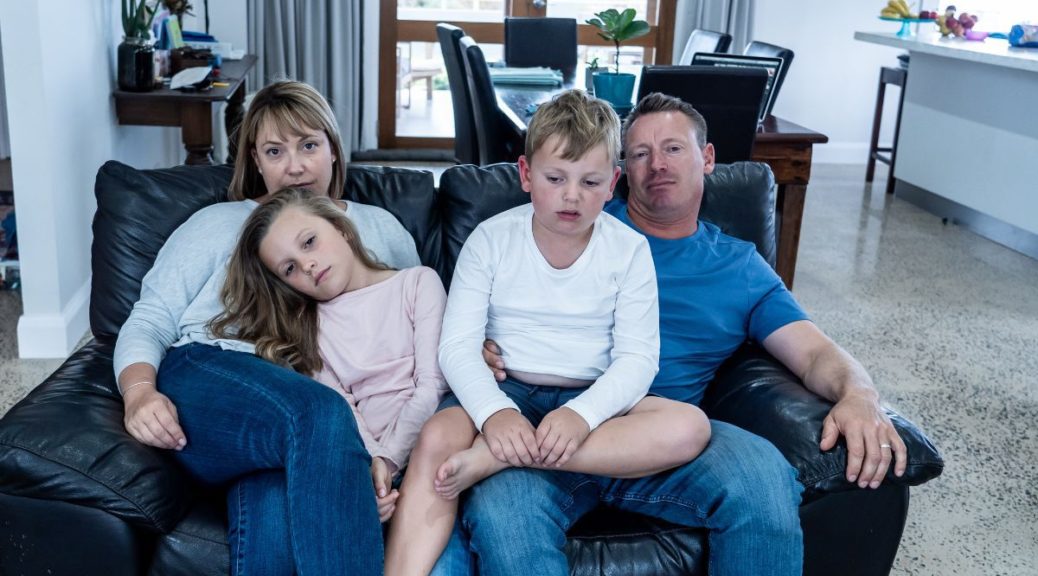


Talking About Your Ex-Spouse on Social Media Understanding the Shak vs. Shak Decision Regarding Non-Disparagement Clauses

Talking About Your Ex-Spouse on Social Media: Understanding the Shak vs. Shak Decision Regarding Non-Disparagement Clauses

Social media platforms offer unprecedented views into other people’s lives. We can share everything from pictures of what we had for lunch to our child’s latest soccer success to our favorite motivational messages. But there are times when it’s not a good idea to communicate through social media. Consider people who are divorced or planning to divorce. Social media can provide them with a multitude of ways to talk badly about a co-parent or former spouse. At times, court orders and divorce agreements have included non-disparagement language that prohibits this kind of language. A court case in Massachusetts may have altered how we deal with parents who write negative information about each other online.

Shak vs. Shak

Ronnie and Masha Shak had only been married about fifteen months when Masha filed for divorce. The child they had together was only a year old at the time. A judge issued a temporary order giving sole custody of the child to Masha. Shortly after that, Masha filed a motion asking for additional temporary orders. Among other things, she asked the judge to “prohibit the father from posting disparaging remarks about her and the ongoing litigation on social media.”

The judge did order both parties to refrain from disparaging each other, especially in the presence of their child. The order also stated that neither of them could post anything regarding the divorce on social media.

Ronnie allegedly made additional negative social media posts. Masha filed a complaint for civil contempt against Ronnie for violating the judge’s temporary order. However, another judge decided that Ronnie was not in contempt because the prior order was unlawful prior restraint of speech.

The case moved through Massachusetts courts, eventually reaching the Massachusetts Supreme Court.

The Court’s Decision

After considering the evidence, law, and case law, the Massachusetts Supreme Court (the “Court”) made its decision. The Court vacated the lower court’s orders on future disparagement. Among other things, the Court stated:

“We recognize that the motion judge put careful thought into his orders in an effort to protect a child caught in the middle of a legal dispute who was unable to advocate for himself. However, because there was no showing of an exceptional circumstance that would justify the imposition of a prior restraint, the nondisparagement orders issued here are unconstitutional.”

One reason the Court made this decision is because the child in question was a toddler and unable to understand what his parents had posted on social media. The Court felt the non-disparagement language was not needed and was, in fact, unconstitutional since the child was not directly harmed.

Also, the Court specifically noted that its order does not affect voluntary non-disparagement agreements.

Non-Disparagement, Social Media, and Your Divorce

Court order or not, it’s still a bad idea to say nasty things about your child’s other parent. Your spouse may not get a judge to order you to stop. However, you may be sued for defamation or have other legal action taken against you. But that’s not the worst part.

When you post something nasty (even if you think it is true) on social media, ask yourself if it’s in your child’s best interests. It’s probably not.

Your social media posts could be seen by family and friends or even go viral. The judge who makes decisions about your divorce will always consider your child’s best interests, even when you do not.

Is There a Place in Your Divorce for Non-Disparagement Action?

When your spouse or co-parent uses disparaging language about you online, contact an attorney immediately. Such actions could show a disregard for a court order and for protecting your child’s best interests.

Please call us at 415-293-8314 to discuss your case. The attorneys at the Law Offices of Judy L. Burger assist clients with divorce matters. We maintain offices in San Francisco, San Diego, Beverly Hills, Marin County, Santa Barbara, Ventura/Oxnard, San Jose, Gold River (Sacramento), and surrounding communities.

The True Cost of Domestic Violence

The True Cost of Domestic Violence

When something happens often, we may start to lose sight of its importance. For example, an average of 24 Americans per minute are victimized by an intimate partner or family member. You probably know someone who has suffered. You may have been a victim yourself. Once someone is in a safe place or has recovered from their injuries, it may seem like the incident is over. However, the long-term effects of intimate partner violence make it difficult to understand the true cost of domestic violence.

The term ‘domestic violence’ actually encompasses far more behaviors than you may realize. In fact, abuse may include physical, sexual, verbal, emotional, and psychological abuse. Economic control and other methods of intimidation are also considered domestic violence. And it does not have to be committed by someone with whom you have a romantic interest. The abuser can be anyone who is closely related or living with you.

Domestic Violence Affects Mental Health.

The aftereffects of physical abuse are typically easy to see. But once the bruises have healed, the victim may still suffer. Fear is a strong emotion, and it’s natural for a victim to be fearful that the abuse will happen again unless they get help.

Psychological harm is less obvious but just as destructive. Victims of domestic violence may even develop post-traumatic stress disorder (PTSD) that affects their daily lives.

The mental health cost of domestic violence can be measured in the cost of therapy. The harm to a victim’s spirit is a cost that cannot be easily determined.

Chronic Illnesses Add to  Domestic Violence Costs

Domestic violence takes a toll on the person being abused. In fact, it’s highly likely they will develop chronic illnesses. Studies have shown the links between violence and long-term health problems. For example, stress and other aftereffects can cause or exacerbate conditions like:

People exposed to domestic violence may also engage in behavior that endangers their health. The cost of domestic violence includes medical care and therapies needed to counteract chronic illness.

Medical Bills May Pile Up

People injured by an intimate partner may require medical treatment for injuries, mental health problems, and chronic illness. Adults or children who have merely witnessed domestic violence may also need medical care. The cost of domestic violence in terms of medical care is staggering. In the United States alone, the estimated annual cost of domestic violence is $8.3 billion.

Domestic Violence Causes Pain and Suffering

This estimate may not factor in the indirect cost of domestic violence. A victim of domestic violence may feel pain and suffering for an exceptionally long time. Their friends and loved ones also suffer, knowing that someone they love is in harm’s way. Pain and suffering are impossible to calculate. But they can cause long-lasting issues in a person’s life.

Determining the Cost of Domestic Violence Is Not Easy

If you have been the victim of domestic abuse, call the National Domestic Violence Hotline at 1-800-799-7233. Then call an attorney who can offer legal solutions to your situation.

Please call us at (415) 293-8314 to schedule a confidential appointment with one of our attorneys. Ms. Burger is a California Certified Family Law Specialist and founder of the Law Offices of Judy L. Burger. We assist clients in California’s Northern to Central Coast, including San Francisco, Beverly Hills, Gold River, San Diego, Santa Barbara, Ventura/Oxnard, and surrounding communities.

My Husband Won’t Respond to My Divorce Petition. What Should I Do

My Husband Won’t Respond to My Divorce Petition. What Should I Do?

Maybe you and your spouse have lived apart for some time and have lost touch. Maybe your spouse does not want the marriage to end. In some cases, you filed for divorce, but your husband won’t respond to your divorce petition. Let’s look at some of the options that are available when something like this happens.

Filing for Divorce in California

First, you will start by completing and filing some or all of the following documents with the court clerk:

  • Petition – Marriage/Domestic Partnership
  • Summons (Family Law)
  • Property Declaration
  • Declaration Under Uniform Child Custody Jurisdiction and Enforcement Act (if you have children)
  • Child Custody and Visitation (Parenting Time) Application Attachment (optional)
  • Any other forms required by the clerk in your county.

Next, you must serve copies of your filed documents on your spouse, along with a blank copy of the Response—Marriage/Domestic Partnership. However, don’t do this yourself. Anyone over the age of 18 can deliver the copies, including a friend, relative, county sheriff, or process server. You can also have someone mail the copies if your spouse agrees to accept service by mail.

Then, file a Proof of Service of Summons with the court. This is important because the court cannot end the marriage at this point if your spouse has not received the documents you filed.

Failing to Respond to a Divorce Petition

Let’s assume that you were able to serve your divorce petition on your spouse. You have filed all the paperwork that is required of you. Your husband or wife now has 30 days to respond to your divorce petition.

When a spouse refuses to take any action, the courts can still end your marriage. In California, both people do not have to agree to get divorced.

After 30 days, you and your attorney can ask the court to give you a judgment of divorce and any other orders you request. You will need to file the following documents:

  • Request to Enter Default,
  • Declaration for Default or Uncontested Dissolution or Legal Separation,
  • Judgment, and
  • Notice of Entry of Judgment.

Depending on your situation,  you may need to file documents regarding:

  • child custody and visitation,
  • child support,
  • spousal support, and
  • division of community property and debt.

Remember this: Your divorce does not just disappear because your spouse refuses to respond. His or her previous control over your marriage will not stop your case from proceeding.

When Your Spouse Won’t Respond to Your Divorce Petition, You Still Have Options.

Talk to an experienced California divorce attorney today. Please call us at (415) 293-8314 to schedule a confidential appointment with one of our attorneys.

Please call us at 415-293-8314 to discuss your case. The attorneys at the Law Offices of Judy L. Burger assist clients with divorce matters. We maintain offices in San Francisco, San Diego, Beverly Hills, Marin County, Santa Barbara, Ventura/Oxnard, San Jose, Gold River (Sacramento), and surrounding communities.
Can Step-Parents Get Visitation Rights

Can Step-Parents Get Visitation Rights?

Kristen’s husband died when their two children were very young. Three years later, she married Brendan. Soon, Brendan became close to the children, attended ball games, and helped with homework. When Kristen filed for divorce, Brendan was left wondering if step-parents get visitation rights. Would he be allowed to participate in the kids’ lives even though he was not the children’s biological father?

California Visitation Rights, Generally

When parents divorce, they must prepare a parenting plan and submit it to the court for approval. Their plan describes how to split parenting time. Plans typically set out weekly visitation, as well as a holiday schedule.

Child custody also plays a part in visitation. The judge may award sole physical custody, sole legal custody, joint physical custody, or joint legal custody. Depending on the type of custody, a child might live with a custodial parent and only visit the non-custodial parent.

But custody and visitation are usually decided between biological parents. What happens when a step-parent like Brendan asks for visitation.

Step-Parents Visitation and the Kids

Despite living with the children for years, Brendan is not legally considered to be their father. As such, he is not automatically qualified to be considered for custody or visitation.

However, step-parents may petition the court for visitation rights. In fact, California law states that:

“Children have a fundamental right to maintain healthy, stable relationships with a person who has served in a significant, judicially approved parental role.”

Courts may consider Brendan to have served as a parent, and award visitation rights to him. Generally, courts might grant visitation rights to anyone who has an interest in the child’s welfare.

Reasons to Deny Step-Parent Visitation Rights

California law specifically states that reasonable visitation rights will be granted, “if visitation by the step-parent is determined to be in the best interest of the child.” However, judges tend to deny step-parent visitation rights if they feel such visitation is not in the best interests of the child.

Call to Learn More About Step-Parents and Visitation Rights

If you are a step-parent who is fighting to visit your step-kids, contact us to learn more about your options. We can also help if you have reasons for blocking step-parent visitation with your children.

The attorneys at the Law Offices of Judy L. Burger are experienced at all phases of divorce, including child custody and visitation. Call us at 415-293-8314 to schedule a private appointment or visit our website. We maintain offices in San Francisco, San Diego, Beverly Hills, Marin County, Santa Barbara, Ventura/Oxnard, San Jose, Gold River (Sacramento), and surrounding communities.

my wife makes more than i do will she have to pay spousal support

My Wife Makes More Than I Do. Will She Have to Pay Spousal Support?

Seth and Angela enjoyed a comfortable, upper-class lifestyle during their 12-year marriage. However, many of their luxuries were made possible by Angela because she earned far more than Seth. This became an issue only when they decided to divorce because Seth asked his wife to pay spousal support to him. Does a wife have to pay her ex-husband support after they divorce? Isn’t that usually the husband’s duty? Continue reading

How to Handle business assets in a divorce

How to Handle Business Assets in a Divorce

Company ownership varies, which can make handling business assets in a divorce that much more difficult. A couple may start a business, then later divorce. Some companies might have been passed down through the family for generations, giving their owners a deep sense of family pride that may not be felt by their spouse. Other people may own part of a business, perhaps as a partner or a stockholder. Dealing with assets from any type of business can be challenging for a divorcing couple. Continue reading

how can i terminate a domestic partnership

How Can I Terminate a Domestic Partnership?

Relationships can get messy. Alexis and Callie found this out as soon as Callie started planning their wedding ceremony four years into their registered domestic partnership. The stress triggered negative feelings, and Alexis started reconsidering their relationship. Unfortunately, the situation ended with one partner picking out a wedding cake and the other trying to figure out how to terminate a domestic partnership. Continue reading

I Just Got Married. How Soon Can I File for Divorce

I Just Got Married. How Soon Can I File for Divorce?

Sophie and Liam decided to move to California and get married, in that order. Liam moved to San Jose in January to find them a place to live and get a job, but Sophie had unfinished business in their home state of Kentucky. Sophie planned to follow in May so that she could prepare for their June wedding. Everything seemed to run smoothly until July when Sophie learned that her marriage had been a big mistake. She quickly contacted a California divorce attorney to ask how soon she could file for divorce from Liam, even though she had just gotten married. Her attorney helped her understand California residency requirements as they explored solutions to her problem. Continue reading

what happens to the kids when the custodial parent dies

What Happens to the Kids When the Custodial Parent Dies?

The obituary stated that Carol Smith was survived by her two children, Peter and Cindy. What it didn’t mention was the difficult situation Peter, Cindy, and their loved ones faced. During her divorce from the children’s father, the court granted sole physical custody to Carol. Where the children would live, and with whom, could be uncertain now that Carol is gone. When a custodial parent dies, some hard decisions may lie ahead. Continue reading

homeschooling divorce and the coronavirus shut down

Homeschooling, Divorce, and the Coronavirus Shut Down

Most parents focus on keeping their children safe from harm and preparing them for the future. How you handle this during a divorce becomes complicated even without the extra concerns associated with a public health emergency. For example, education is essential, but so is protecting your kids from COVID-19. How can you educate your children without sending them to school?  We need to find ways for homeschooling, divorce, and the coronavirus shut down to co-exist peacefully for the sake of our children. Continue reading